
best games with alien invasion and defense usually scratch a very specific itch: panic at the perimeter, tough choices about where to spend scarce resources, and that satisfying moment when your defenses finally “hold” by a hair. If you love that loop but hate wasting money on something that turns into a grind, you’re not alone.
This niche is bigger than it looks, because “alien invasion” can mean very different things: tactical squads fighting a global threat, top-down base-building under constant raids, or survival management where the enemy is pressure, not just bullets. The best pick depends less on review scores and more on how you like to make decisions under stress.
Below, you’ll get a practical shortlist across different play styles, a quick comparison table, and a simple way to match a game to your time, skill level, and tolerance for micromanagement. I’ll also call out common “I wish I knew this” gotchas, like DLC traps, difficulty spikes, and co-op expectations.
What players usually mean by “alien invasion + base defense”
People search for best games with alien invasion and defense when they want both a clear external threat and a home base that matters. That can show up in a few recognizable formats, and mixing them up is where a lot of buyer’s remorse starts.
- Strategic layer + tactical battles: you manage a wider war, then fight missions where positioning and cover matter.
- Colony/base building under raids: you design layouts, power grids, chokepoints, and deal with repeated attacks.
- Horde defense / tower defense hybrid: shorter sessions, heavier focus on turret placement and upgrade paths.
- Survival management: defenses exist, but the real challenge is economy, morale, and recovery after losses.
One useful lens: do you want to outsmart the invasion (planning) or outshoot it (execution)? Great games can do both, but most lean hard one way.
A curated list: best games that nail alien invasion + defense
This list leans toward games where the invasion pressure feels real and the base decisions have consequences. Availability can vary by platform and region, so treat this as a “what to look for” shortlist.
XCOM 2 (plus War of the Chosen if you want the full arc)
If you want an alien occupation story with tactical depth, XCOM 2 remains a reference point. The “base” is a mobile HQ rather than a build-anywhere fortress, but the defense fantasy still works because your strategic choices directly shape mission survival.
- Why it fits: tense turn-based fights, meaningful tech progression, strong enemy variety
- Watch for: punishing mistakes, mod/DLC rabbit hole on PC
They Are Billions
Classic “one breach and it’s over” base defense, except the threat is infected rather than aliens. It still belongs on many “alien invasion” shopping lists because the core loop is identical: expansion vs safety, scouting vs greed, and layered defenses.
- Why it fits: brutal perimeter management, readable attack patterns, satisfying wall-and-turret scaling
- Watch for: difficulty curve, campaign feel may not click for everyone
Factorio (with alien pressure as the clock)
Factorio is automation first, but the enemy pressure forces you to design a base that can survive while you scale. If you like solving logistics puzzles and then watching your defenses prove the design works, it’s hard to beat.
- Why it fits: deep build planning, defense is a systems problem, huge replay value
- Watch for: time sink risk, can feel overwhelming without self-set goals
RimWorld (especially for emergent “siege” stories)
RimWorld is not strictly alien-invasion themed by default, but it excels at base defense decisions under unpredictable threats. With DLC and mods, the sci-fi invasion vibe can get very strong, but even vanilla raids create the same “hold the line” tension.
- Why it fits: storytelling through systems, creative defenses, meaningful recovery after disaster
- Watch for: colony management complexity, modding can change balance wildly
Sanctum 2 (FPS + tower defense, co-op friendly)
When you want the base-defense loop in shorter, friendlier sessions, Sanctum 2 is a clean blend: build corridors, place defenses, then fight in first person when waves arrive.
- Why it fits: accessible co-op, clear wave structure, good “one more run” pacing
- Watch for: if you crave deep economy layers, it may feel light

Quick comparison table (pick by feel, not hype)
Use this as a fast filter. If two games look close, let “session length” and “stress level” break the tie.
| Game | Core style | Base defense focus | Co-op | Difficulty feel |
|---|---|---|---|---|
| XCOM 2 | Tactical strategy | Strategic layer impacts survival | No (mods vary) | High, mistake-punishing |
| They Are Billions | RTS defense | Walls, chokepoints, wave prep | No | Very high, snowball fails |
| Factorio | Automation | Perimeter scaling with pollution | Yes | Medium, can be intense |
| RimWorld | Colony sim | Raids + recovery planning | No (mods exist) | Variable, storyteller-driven |
| Sanctum 2 | FPS + tower defense | Wave defense builds | Yes | Medium, skill-based |
Self-check: which “defense fantasy” are you actually chasing?
Before you buy, do a quick gut-check. Most people know what they like, they just don’t label it.
- I want chess-like moves: turn-based tactics, minimal twitch, high consequence.
- I want to engineer a fortress: layout, resource lines, layered walls, predictable improvement.
- I want adrenaline in short bursts: wave defense, co-op runs, quick restarts.
- I want stories and chaos: unexpected disasters, weird wins, occasional heartbreak.
If you pick the wrong fantasy, even the “best games with alien invasion and defense” can feel off, because the loop won’t match your patience level.
How to choose based on your time, platform, and tolerance for pressure
Here’s the decision path that tends to reduce regret the most.
If you have 20–40 minutes per session
- Go for: wave-based or mission-based formats (Sanctum 2, XCOM 2 missions)
- Avoid: sprawling builders unless you enjoy stopping mid-problem (Factorio, RimWorld can run long)
If you only relax when systems “click”
- Go for: Factorio, RimWorld
- Tip: look for games that let you iterate, not just restart
If you want pure perimeter panic
- Go for: They Are Billions
- Tip: accept early losses as part of learning, it’s built into the appeal
If you’re buying for a friend group
- Go for: co-op options where roles emerge naturally (Factorio, Sanctum 2)
- Tip: align expectations on “serious planning” vs “casual shooting” before you start
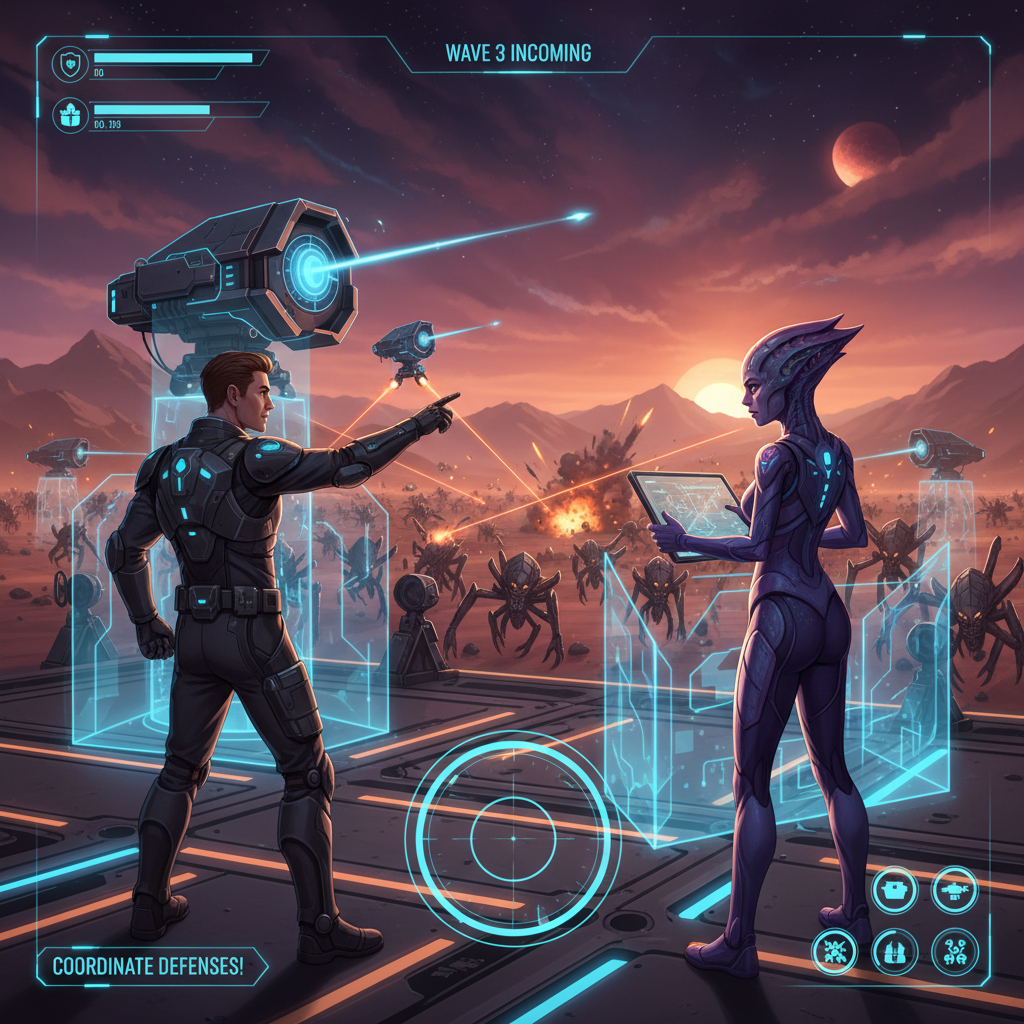
Practical playbook: make base defense feel good (not grindy)
Even great games can feel punishing if you approach them like a generic shooter or a generic builder. A few habits usually help across the board.
- Scout like you mean it: fog-of-war kills more runs than weak guns.
- Design for failure: build fallback lines, not one “perfect” wall.
- Budget for maintenance: ammo, power, repairs, and replacement units are part of your economy.
- Automate repeat decisions: hotkeys, blueprints, saved loadouts, and standard wall segments save mental energy.
According to ESA (Entertainment Software Association), strategy and action genres remain consistently popular in the U.S. market, which tracks with why this hybrid niche keeps growing: it combines planning satisfaction with moment-to-moment tension without needing esports-level reflexes.
Common mistakes when shopping this sub-genre
A few pitfalls come up repeatedly, especially for players chasing best games with alien invasion and defense lists and buying on vibes alone.
- Assuming “base defense” means base building: some games use a “hub” or “HQ” where choices matter, but you won’t place walls.
- Overbuying DLC day one: many titles feel better after you know what loop you enjoy, DLC can wait.
- Confusing difficulty with depth: harsh penalties can be fun, but only if the game teaches you why you lost.
- Buying for co-op without checking friction: co-op may exist, but pacing and role clarity vary a lot.
If you’re sensitive to frustration, look for adjustable difficulty, granular autosaves, or modes that let you experiment without hard wipes. That’s not “easy mode,” it’s respecting your time.
Conclusion: the best pick is the one you’ll replay
The “best” in best games with alien invasion and defense usually comes down to one thing: do you enjoy the decision pressure enough to come back after a loss? If you want high-stakes tactics, start with XCOM 2; if you want fortress engineering, They Are Billions hits hard; if you want systems you can live in, Factorio or RimWorld reward patience; if you want lighter co-op defense, Sanctum 2 keeps it moving.
Action steps: pick one game from the table that matches your session length, then watch 10 minutes of mid-game footage, not a trailer, to confirm the pace feels right.
FAQ
What are the best games with alien invasion and defense for beginners?
Look for games with clear wave structure or mission structure, because they teach you in chunks. Sanctum 2 is often easier to onboard than deeper builders, and XCOM 2 can work if you’re comfortable learning through failures.
Which alien invasion defense games are best for co-op?
Factorio and Sanctum 2 stand out because teamwork feels natural: one person can plan, another can fight or optimize. Co-op quality varies widely by title, so verify whether co-op is built-in or relies on mods.
Is XCOM 2 really “base defense” if you don’t build walls?
Not in the traditional turret-and-walls sense. It still fits the defense fantasy because your strategic HQ choices decide whether missions are survivable, and the campaign pressure creates that same “hold the line” feeling.
What if I want a game that’s more about building a fortress than fighting?
Start with Factorio if you enjoy logistics and automation, or They Are Billions if you want pure perimeter tension. RimWorld can also work if you like improvised defenses and recovery after raids.
Do I need DLC to enjoy this genre?
Usually not. Many players have a better time buying DLC after they confirm they like the core loop, because expansions can add complexity or change pacing in ways you may not want.
How do I avoid getting overwhelmed in complex base defense games?
Set one goal per session, like “secure power” or “upgrade perimeter,” and stop there. Also, use presets, blueprints, and standard layouts; repeating good patterns is part of how these games become relaxing instead of exhausting.
Are these games safe for kids?
It depends on the game’s rating and content themes. Check the ESRB rating and read the content descriptors; if you’re unsure, it may help to watch a few minutes of typical gameplay and decide what feels appropriate for your household.
If you’re trying to choose between a couple of options, a simple, low-risk approach is to start with one game that matches your session length, then branch into deeper builders later if you find yourself craving more planning and less reacting.