
Stealth games with non lethal options are the answer when you want the tension of sneaking, planning, and improvising without turning every mission into a body-count puzzle. If you bounce off stealth titles because you feel pushed into lethal takedowns, you’re not alone, a lot of games advertise “stealth” but quietly reward aggression.
The tricky part is that “non-lethal” can mean different things: sometimes it’s a full playstyle with tools, scoring, and narrative support, other times it’s a checkbox that still punishes you with higher difficulty or worse outcomes. Knowing that difference saves time, and it helps you pick games that actually respect the way you want to play.
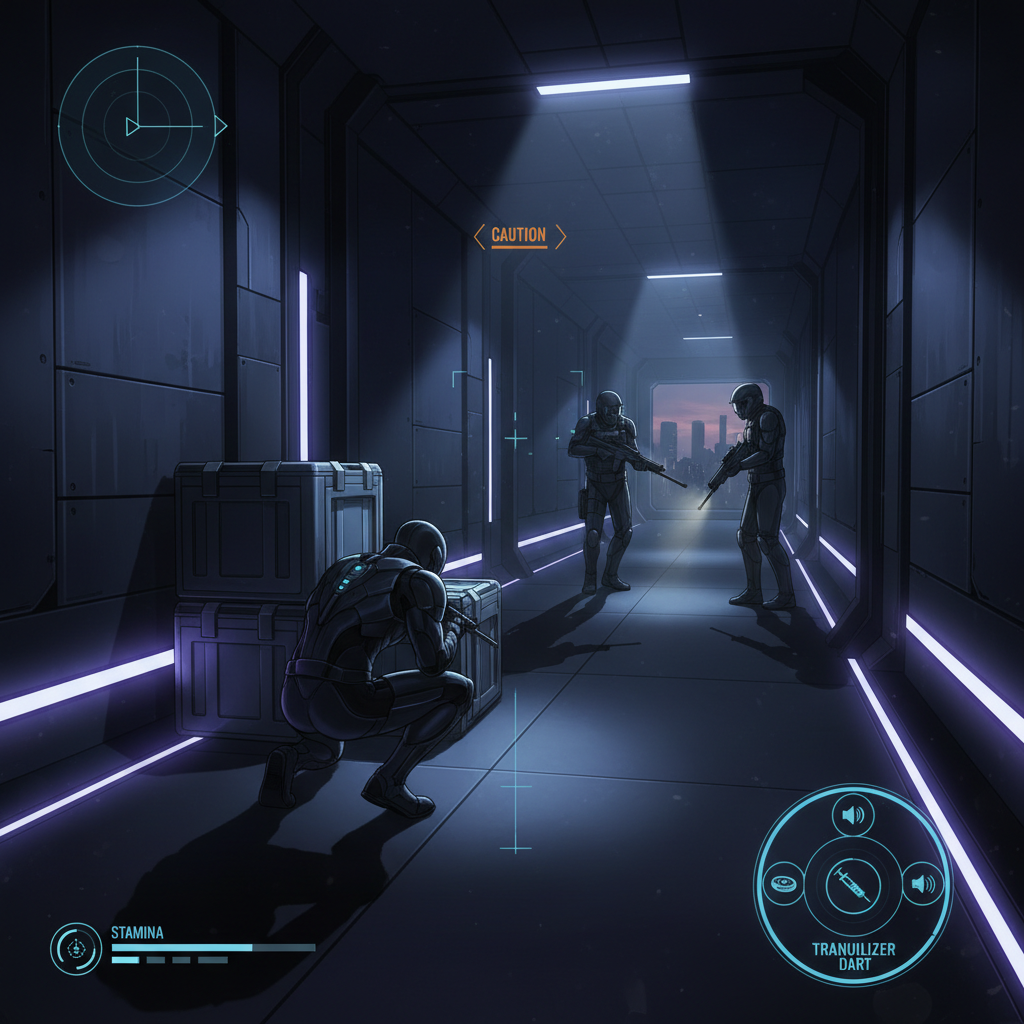
This guide breaks down what “non-lethal options” look like in real gameplay, a quick self-check to find your best fit, a curated set of well-known picks, and practical tips to finish missions clean without the run feeling like a chore.
What “non-lethal” really means in stealth games
In practice, non-lethal stealth usually falls into a few patterns. The best games make these systems feel intentional, not like a self-imposed challenge mode.
- Non-lethal takedowns: chokeholds, sleep darts, stun batons, or “knockout” melee that doesn’t kill.
- Avoidance-first stealth: you can complete objectives by ghosting past enemies, with minimal contact.
- Systemic distractions: noise makers, lures, hacking, gadgets, or environmental interactions that reduce direct confrontation.
- Scoring and consequences: the game tracks kills, bodies found, alarms, or chaos, and reacts to your choices.
One detail many people miss: “non-lethal” isn’t always morally “clean” in the game’s logic. Knockouts might still be treated as violence, and leaving unconscious bodies in unsafe places can cause indirect harm in some rule sets. If you care about role-play consistency, look for games that handle this thoughtfully.
Why players look for non-lethal options (and where games often fail)
There are a few common reasons people actively search for this style, and they map to where stealth design tends to wobble.
- Role-play: you want to feel like a spy, infiltrator, or professional, not an unstoppable assassin.
- Challenge preference: lethal solutions can trivialize stealth once you learn routes; non-lethal often keeps the tension.
- Story tone: some narratives feel off if the “good guy” quietly eliminates 40 guards.
- Replay value: non-lethal routes, gadgets, and score chasing give you a second way to solve the same level.
Where games fail is usually one of these: limited ammo or tools for non-lethal, forced boss fights that demand damage, or level layouts that funnel you into combat. If that stuff frustrates you, you’ll want titles that explicitly support ghosting or pacifist play.
Quick self-check: what kind of non-lethal stealth run do you want?
Before you pick a game, it helps to decide what “non-lethal” means for your mood. Use this as a quick filter.
- I want zero takedowns (true “ghost”): you prefer hiding, timing, and route planning over touching anyone.
- I’m okay with knockouts: you want clean rooms and safe paths, but no kills.
- I want the game to react: scoring, endings, or world state should clearly reward restraint.
- I hate fragile stealth: you want forgiving detection systems so a small mistake doesn’t snowball into a massacre.
- I like gadgets more than aim: hacking, distractions, and tools matter more than precision shooting.
If you match the first or third bullet, prioritize games where non-lethal is tied to objective design and scoring, not just a weapon swap.
Stealth games that meaningfully support non-lethal play
This is not “every stealth game ever,” it’s a practical shortlist of series and titles widely associated with viable non-lethal or low-violence stealth. Availability varies by platform and generation.

At-a-glance comparison
| Game / Series | Non-lethal tools | Ghosting viable? | How the game rewards it |
|---|---|---|---|
| Dishonored (series) | Sleep darts, chokeholds, powers | Often yes | Lower “chaos” and different tone/outcomes |
| Deus Ex (Human Revolution / Mankind Divided) | Stun gun, tranquilizers, takedowns | Frequently | XP routes, access paths, narrative consistency |
| Metal Gear Solid (varies by entry) | Tranquilizers, CQC holds, gadgets | Sometimes | Rankings, stealth mastery, sandbox flexibility |
| Hitman (World of Assassination) | Subdues, sedatives, accidents setup | Yes, with planning | Silent Assassin-style ratings, cleaner runs |
| Splinter Cell (series) | Non-lethal takedowns, gadgets | Often | Scoring/stealth grading in many missions |
| Thief (classic entries and some modern takes) | Blackjack knockouts, tools | Yes | Stealth focus, limited combat incentives |
A small reality check: even in these, you may run into edge cases, scripted fights, mandatory targets, or “accident” mechanics that blur lines. If your personal rule is “no deaths under any circumstances,” check each game’s mission structure before committing.
How to play non-lethal without turning it into slow, painful stealth
Non-lethal runs get a bad reputation because people over-invest in perfection early, then burn out. You can keep it clean without crawling for 40 minutes.
Practical tactics that scale across games
- Plan your exits, not just your entries: many alerts happen when you backtrack through a now-busier corridor.
- Prefer “distraction chains”: one noise moves a guard, the next opens a gap, then you slip through. It’s faster than repeated takedowns.
- Knockouts are a tool, not a default: if you subdue every guard, you create more body-management risk and more time cost.
- Learn one safe room: a closet, a dark corner, a vent loop. Use it as your reset point when patrols get messy.
- Invest in information upgrades: enemy vision cones, hearing indicators, camera hacking, or minimap intel usually help more than stronger weapons.
According to ESRB, many games label non-lethal actions as “Violence” depending on context, which matters if your goal is also content sensitivity rather than just gameplay style. If you’re choosing for a younger player, check the rating descriptors in addition to the toolset.
Common mistakes that make “pacifist stealth” feel impossible
Most frustration comes from a handful of predictable errors, and they’re fixable once you name them.
- Assuming the game will tell you it’s allowed: many titles never explicitly say “you can ghost this,” you learn by testing routes.
- Overusing sleep/KO: unconscious bodies can get found, wake up, or trigger suspicion in some systems.
- Ignoring sound budget: sprinting, broken glass, loud doors, and unsilenced gadgets often cause the “random” detection spiral.
- Saving only when things go well: if your save discipline depends on perfection, you’ll restart too much and start resenting the run.
- Bringing the wrong kit: non-lethal is often about access, keys, hacks, lockpicks, disguises, not extra darts.
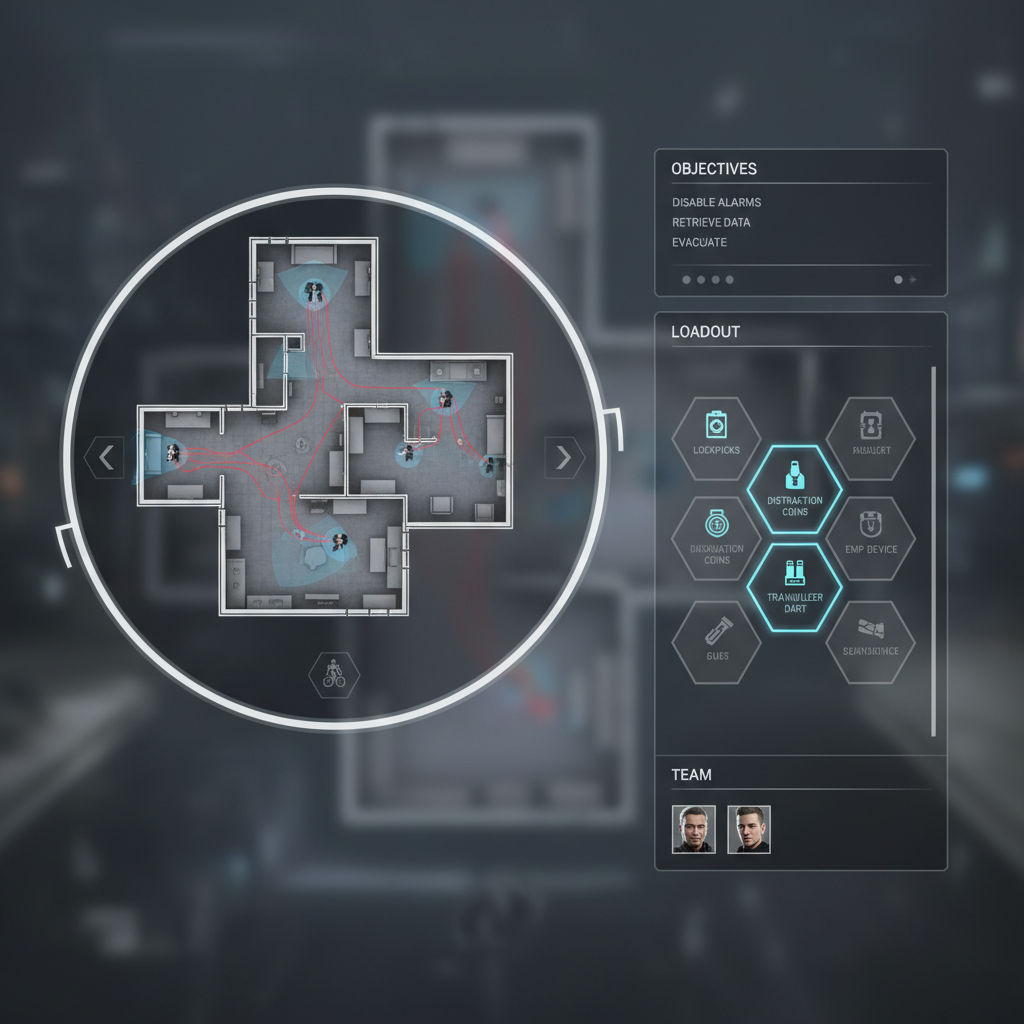
If a game feels “anti-non-lethal,” it might not be you. Some designs simply tune difficulty around removing threats permanently, and knockouts become a clumsy compromise.
Picking the right game for your specific non-lethal goal
Here’s a more opinionated match-up, because the best choice depends on what you actually enjoy moment to moment.
- You want the world to react to mercy: look for systems with explicit consequence tracking, like chaos or reputation mechanics.
- You want a pure stealth fantasy: choose games that minimize forced combat and reward invisibility over dominance.
- You want sandbox improvisation: pick titles with social stealth, disguises, or flexible level design so “no kills” stays fun.
- You want modern accessibility: consider games with robust difficulty sliders, stealth assists, and customizable detection options.
Also, check how the game defines “non-lethal.” Some treat environmental “accidents” as acceptable for top ranks, others count any death, even indirect, as a fail. If that distinction matters to you, read the in-game rating rules early instead of discovering them after a long mission.
Key takeaways before you start your run
- Non-lethal support is a design choice, not a guarantee just because the game has a tranquilizer.
- Ghosting and non-lethal takedowns are different flavors, decide which one you want before picking a title.
- Fast clean runs come from routing and distractions, not from putting every guard to sleep.
- Expect exceptions like scripted fights or ambiguous “accident” rules, and plan your personal rules accordingly.
Conclusion: make non-lethal stealth feel like a feature, not a restriction
If you’ve been hunting for stealth games with non lethal options because combat-heavy stealth feels wrong for you, the good news is that several major series genuinely support restraint as a first-class way to play. Pick a game that rewards your choice, decide whether you’re aiming for ghosting or just no kills, then build habits around routing, sound control, and smart gadget use.
If you want a simple next step, choose one game from the shortlist, play the first few missions with a “low takedown” rule, and adjust from there. Your ideal non-lethal style shows up fast once you stop trying to be perfect on mission one.
FAQ
- What are the best stealth games with non lethal options for beginners?
Games with forgiving detection and clear non-lethal tools tend to feel better early on. Look for entries that include generous save systems, strong tutorialization, and multiple paths, so mistakes don’t force lethal recoveries. - Do non-lethal takedowns count as “violence” in game ratings?
Often yes. Ratings depend on presentation and context, not just whether enemies die. If ratings matter in your household, check the platform store page and ESRB descriptors. - Is a “ghost” run the same as a non-lethal run?
Not always. Ghosting usually means minimal detection and minimal interaction, while non-lethal may still involve plenty of knockouts. Some players do both, but the mindset differs. - Why do some stealth games still force boss fights that break pacifist play?
Sometimes it’s pacing, sometimes it’s legacy design. A few games add alternate non-lethal boss solutions in later versions or through creative tools, but it varies, so it’s worth checking mission rules early. - Are stealth games with non lethal options harder?
They can be, especially if the level design expects you to thin patrols. On the flip side, many players find non-lethal more consistent once they learn routes, because it reduces chaos from open combat. - What’s the biggest tip for staying non-lethal when you get spotted?
Have an “escape loop” ready: break line of sight, reset in a known safe zone, then re-enter from a different angle. Panic-fighting is where most accidental kills happen. - Can I play stealth non-lethally without using sleep darts or stun weapons?
Usually, if the game supports ghosting with vents, vertical routes, disguises, or hacking. If a game relies on takedowns to manage patrol density, you may feel boxed in without those tools.
If you’re still unsure which of these stealth games with non lethal options fits your taste, make a short list based on whether you prefer ghosting, gadget play, or consequence-driven storytelling, it’s a quick way to avoid buying something that looks right but plays wrong.