
Visual novel games with choices sound simple, but the difference between “pick A or B” and choices that genuinely reshape the story is huge, and it’s why some players bounce off the genre while others obsess over it.
If you’ve ever finished a VN thinking, “Wait, nothing I did mattered,” you’re not being picky, you’re noticing design. Some games use choices as pacing, others use them as the spine of the narrative. This guide focuses on the second kind.

Below, you’ll get a practical way to judge “meaningful choices,” a short curated list of titles known for real branching, and a few tips for enjoying replay-heavy stories without turning it into homework.
What “Meaningful Choices” Actually Means in a Visual Novel
Players often mean one of three things when they ask for visual novel games with choices, and mixing them up causes disappointment.
- Branching outcomes: decisions lead to different scenes, routes, or endings, not just different lines of dialogue.
- Persistent consequences: earlier decisions change later options, character availability, or who trusts you.
- Different themes, not just different scenes: the story’s message or your character’s identity shifts depending on your actions.
According to the Entertainment Software Rating Board (ESRB), ratings and content descriptors help signal mature themes and player agency, but they won’t tell you whether choices truly branch, you still have to read between the lines in reviews and store tags.
Common Reasons Choices Feel “Fake” (Even in Good Games)
Some visual novels are excellent reads yet still leave players feeling tricked. Usually it’s not malice, it’s structure.
- Illusion-of-choice pacing: choices exist to keep you engaged, but routes converge quickly to protect the budget and voice work.
- Single-route stories: your decisions mainly flavor the protagonist’s tone, which can be satisfying, just not what you’re shopping for.
- Hidden flags without feedback: one early line quietly locks you out of an ending, so later choices feel meaningless.
- “Right answer” romance gates: most options funnel toward one optimal path, especially in older dating-sim hybrids.
The key is matching your expectation to the game’s promise: “multiple endings” can mean two, or it can mean ten, and those are very different experiences.
A Quick “Choice-Impact” Checklist (Use This Before You Buy)
If you want visual novel games with choices that genuinely matter, use this quick screening list on Steam, console stores, and spoiler-light reviews.
- Does the store page mention routes, branches, or multiple endings (not just “choices”)?
- Do reviewers talk about replaying for different outcomes, not just extra dialogue?
- Is there a flowchart or chapter select (often a sign the game expects branching)?
- Are decisions tracked with affinity, alignment, “flags,” or visible relationship meters?
- Do choices change who is alive, available, or willing to help later on?
One more reality check: “meaningful” doesn’t always mean “lots.” A VN with a handful of brutal decisions can hit harder than a game with constant prompts that barely ripple.
Recommended Visual Novels Known for Meaningful Choices
This isn’t a “top 50” list. It’s a curated set that players commonly associate with real branching, route divergence, or endings that feel earned. Availability varies by platform.
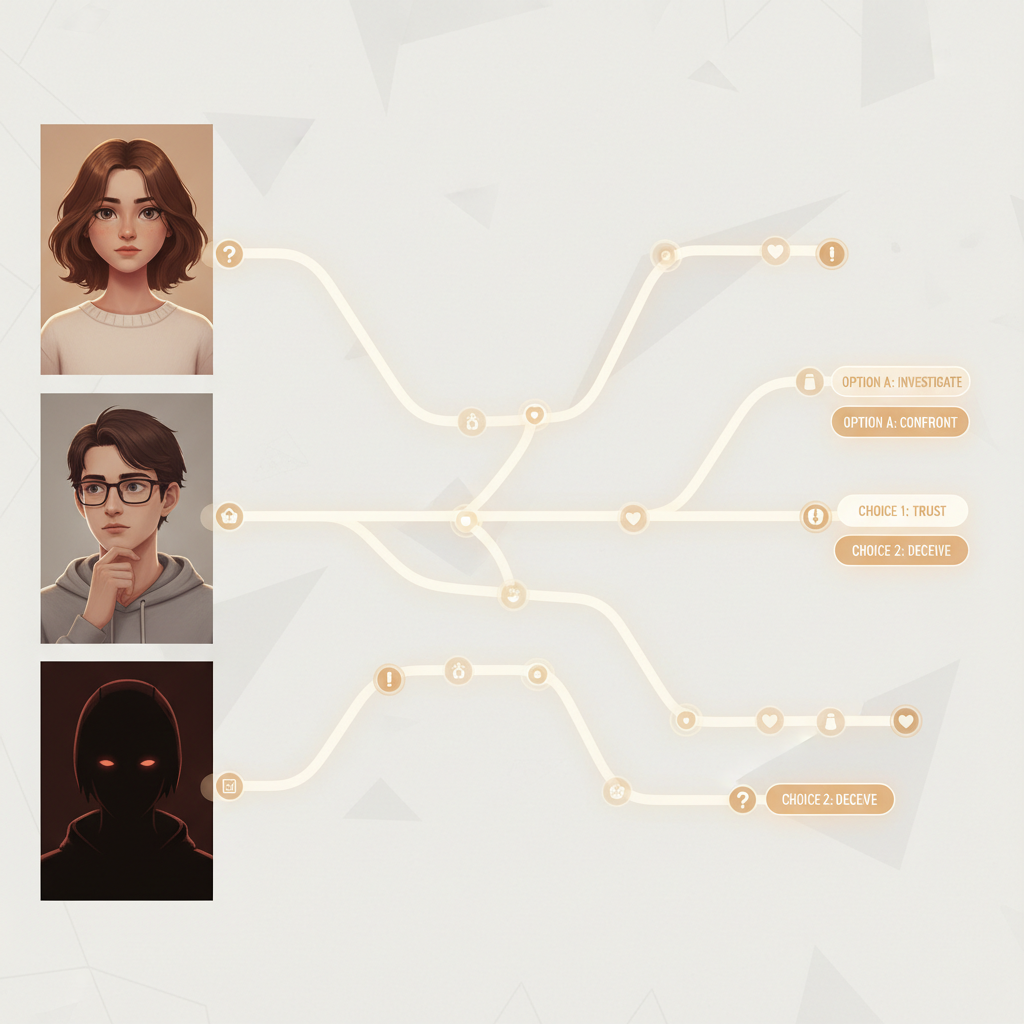
Choice-heavy mystery and thriller
- Zero Escape series (e.g., 999, Virtue’s Last Reward): choices and timelines interlock, and revisiting paths is part of the design.
- AI: The Somnium Files: investigation structure plus decision points that open distinct routes and reveals.
- Raging Loop: social deduction tension, with route knowledge changing how you read people.
Character-route focused, with real divergence
- Clannad: a classic example where routes and accumulated progress shape what you can reach.
- Steins;Gate: phone and message interactions steer you toward different story outcomes.
- The House in Fata Morgana: more linear overall, but choices land with weight when they appear.
Indie narrative games that feel VN-adjacent
- Slay the Princess: frequent decisions, strong reactivity, and a surprisingly flexible narrative core.
- Scarlet Hollow: episodic structure with traits and choices that meaningfully reshape interactions.
Comparison Table: How These Games Handle Player Choice
Use this as a quick “fit check.” Exact mechanics vary, but the categories help you choose what kind of agency you want.
| Game / Series | Choice Structure | What Changes | Best For |
|---|---|---|---|
| Zero Escape | Flowchart timelines | Endings, reveals, access to paths | Puzzle-thriller fans who like replay with purpose |
| AI: The Somnium Files | Route branches via investigations | Routes, culprit context, character arcs | Players who want mystery plus character focus |
| Clannad | Character routes | Relationship outcomes and unlocked content | Romance/drama readers who enjoy long-form payoff |
| Steins;Gate | Message-driven flags | Route direction and ending availability | Sci-fi fans who enjoy subtle choice systems |
| Slay the Princess | High reactivity loops | Character dynamic, tone, scenario outcomes | Players who want choices to feel immediate |
How to Play Choice-Driven VNs Without Burning Out
Meaningful choice often comes with replay. The trick is to replay smart, not harder.
- Use the built-in flowchart or chapter select when available, it’s there because the game expects experimentation.
- Keep one “blind” save where you accept consequences, then branch off later if you want completion.
- Decide your goal early: “one emotionally honest run” feels different from “100% endings.” Both are valid.
- Avoid guides on run one if your main pleasure is tension, then use spoiler-light route hints afterward.

Also, don’t underestimate mood. Some visual novel games with choices are emotionally heavy, and replaying tough scenes back-to-back can feel like work even when the writing is great.
Key Takeaways Before You Pick Your Next VN
- “Choices” is a vague promise, look for routes, flowcharts, and replay-driven design.
- Meaningful can be rare but impactful, you don’t need a decision every two minutes.
- UI features matter: chapter select and skip-unread text usually signal player-friendly branching.
- Buy for the kind of agency you want: mysteries reward experimentation, romances reward commitment, indies often reward bold swings.
Conclusion: Find the Flavor of Consequence You Actually Want
If you’re chasing visual novel games with choices because you want agency, start by choosing your preferred consequence style: big branching routes, slow-burn relationship shifts, or tightly written loops where each decision flips the meaning of the scene. Then use the checklist and table above to avoid the common trap of buying “choice-based” games that only offer cosmetic options.
Your next step can be simple: pick one title from the list that matches your tolerance for replay, do a blind first run, and only then decide if you want to completionist it. That rhythm keeps the magic intact.
FAQ
What are the best visual novel games with choices on Steam?
Steam has a lot of “choice-based” tags, so filter further by games that mention multiple endings or show flowchart screenshots. Indie titles like Slay the Princess and episodic VNs like Scarlet Hollow often communicate reactivity clearly in reviews.
How can I tell if choices change the ending or just the dialogue?
Look for wording like “branching routes,” “multiple endings,” or “locked paths,” and check spoiler-light reviews that mention replaying for different outcomes. If most reviewers say “it’s basically linear,” expect flavor text more than structural change.
Are there visual novels where choices affect who lives or dies?
Yes, especially in thriller and mystery VNs. The Zero Escape series is a common reference point for life-or-death stakes tied to decisions, though the exact mechanism depends on the entry.
Do meaningful-choice visual novels require multiple playthroughs?
Often, yes, but not always. Some games deliver a satisfying single run with a handful of pivotal decisions, while others are built around seeing multiple timelines. A flowchart usually signals the latter.
Should I use a guide for route-heavy visual novels?
If you care about tension and surprise, skip guides at first. If you mainly care about seeing specific character routes without trial-and-error, a spoiler-light route guide can reduce frustration, just expect it to dull uncertainty a bit.
What if I hate “bad endings” but still want real choices?
Pick games that let you jump back via chapter select or flowcharts, then treat bad endings as information rather than failure. Many players enjoy the story more once they stop reading endings as moral judgment.
Are choice-driven VNs appropriate for teens?
It depends on content, not the choice system. Check ratings and content descriptors; according to the Entertainment Software Rating Board (ESRB), descriptors can help you understand themes like violence, sexual content, or language before you buy.
If you’re currently stuck between a few options and you want a more “sure thing,” share what you like, mystery vs romance, how much replay you tolerate, and whether you want a flowchart system, and you can narrow to one or two picks that match your taste instead of gambling on tags.